
Card values
How much is my Pokémon card worth?
A Pokémon card is worth what the exact same printing, in the same condition, has recently sold for. Most cards from packs are worth very little, but some holos, alternate arts and promos sell for hundreds or even thousands. Here is how to find out which kind you have in a few minutes.
Step 1: identify the exact card
Two cards with the same Pokémon and the same picture can be worth completely different amounts, so start by pinning down the exact printing. You need four details:
- Name, including any suffix such as ex, EX, GX, V, VMAX or VSTAR, and any trainer's name: Sabrina's Gengar is not the same card as Gengar.
- Set symbol: the small icon at the bottom of modern cards, or to the right of the artwork on older ones. The original Base Set has no symbol at all. If you don't recognise it, use our set symbol finder.
- Collector number, such as 4/102. A number higher than the set total (for example 138/103) marks a secret rare, usually one of the most valuable cards in its set.
- Variant: holo (the artwork shines), reverse holo (everything except the artwork shines), a 1st Edition stamp on the left just below the artwork on early sets, Shadowless (no drop shadow along the right edge of the art frame, on the earliest Base Set prints), or a stamp such as Prerelease, Staff, a set logo or a "W" on old promos.
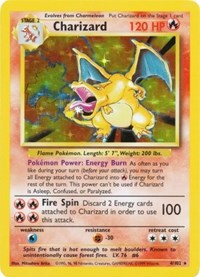
The variant matters more than most people expect. Pikachu from Legendary Collection is a good example: the regular print is cheap, but the reverse holo version, with its fireworks-pattern foil, sells for many times more (see its card page). The three Charizards below share the same artwork, yet they are three different cards with three different prices: Base Set Shadowless, Base Set and the 2000 reprint in Base Set 2.
 CharizardBase Set (Shadowless) · 004/102$2,172.24
 CharizardBase Set · 004/102$987.13
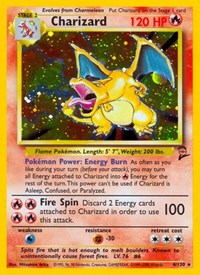 CharizardBase Set 2 · 004/130$494.90
If a symbol or number on your card is unclear, see how to read a Pokémon card and rarity symbols explained.
Step 2: check the condition honestly
After the variant, condition moves the price more than anything else. Take the card out of its sleeve and look at it under a bright light:
- Centering: are the borders even on all four sides, front and back?
- Corners: sharp, or white and rounded?
- Edges: is there white chipping, especially on the back?
- Surface: scratches on the foil, dents, creases, print lines, stains.
Marketplaces use simple condition grades. TCGplayer uses Near Mint, Lightly Played, Moderately Played, Heavily Played and Damaged; Cardmarket uses Mint, Near Mint, Excellent, Good, Light Played, Played and Poor. A single crease is usually enough to push a card into the played grades, and its price with it. The full checklist is in our Pokémon card condition guide.
Step 3: look up what it actually sells for
An asking price is a wish; a sale is a fact. Use prices built from completed sales:
- TCGplayer market price (USA, US dollars), calculated from recent sales on TCGplayer.
- Cardmarket price trend and 30-day average (Europe, euros).
- eBay sold listings, with the "Sold items" filter switched on, for rare and graded cards that only trade now and then.
Ignore the highest listings you come across: anyone can list a common for a fortune. Our card search shows the TCGplayer market price of every card in our database, updated daily, and Pokémon card prices explained covers each price source in detail. Keep in mind that the price shown is for the printing, not for your particular copy: a worn card will fetch less, a flawless one can fetch more.
Raw or graded?
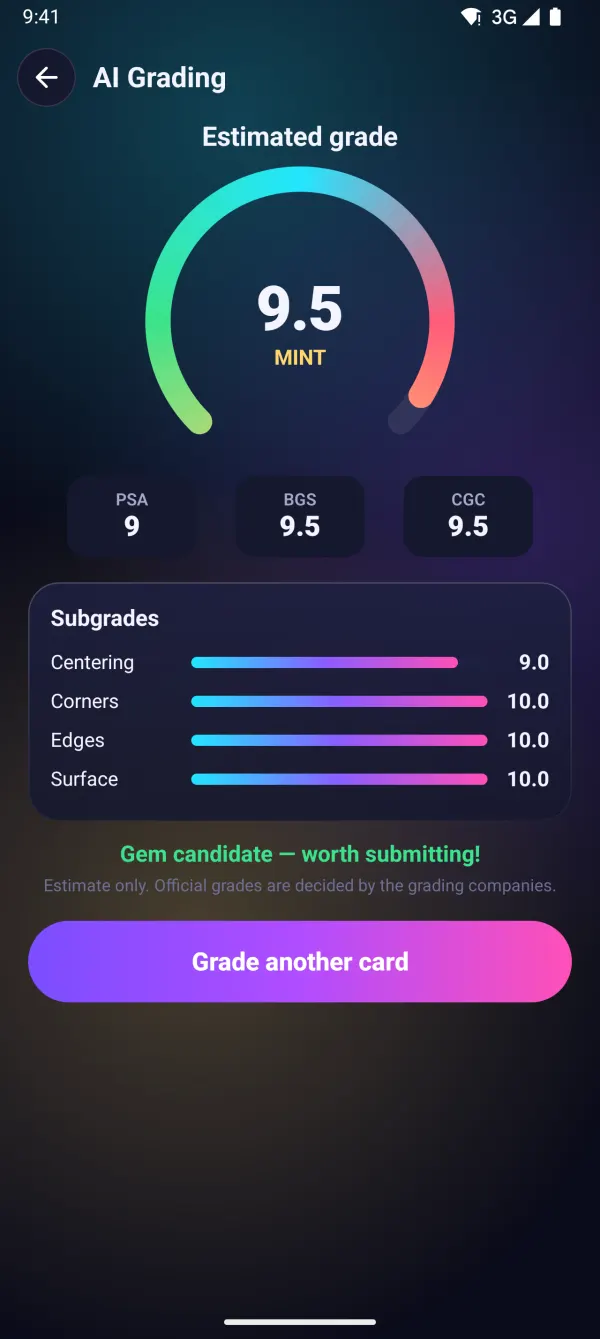
A raw card is one that is not inside a grading company's sealed case. A graded card has been examined by a company such as PSA, BGS (Beckett) or CGC, given a grade from 1 to 10 and sealed in a plastic slab. Graded copies have their own market: a top grade can be worth many times the raw price, while a low grade may add little or nothing.
Grading costs money and takes time, and both fees and waiting times change, so check them on the grader's own website. It usually only makes sense for cards that are already valuable raw and in near-perfect condition. Our grading calculator and the guide should you grade your Pokémon cards? help you decide.
Which cards are usually worth money
Most cards are not valuable, but these families deserve a second look.
Vintage holos (1999 to 2003)
Holo rares from the Wizards of the Coast era are the classic money cards: Base Set, Jungle, Fossil, Team Rocket, Gym Heroes, Gym Challenge and the four Neo sets, above all with a 1st Edition stamp or from the Shadowless print run. The e-Card sets that closed the era (Expedition, Aquapolis, Skyridge) also hold some of the most expensive English cards.
Shining Pokémon and Gold Stars
The Shining Pokémon of Neo Revelation and Neo Destiny, and the Gold Star cards (a star after the Pokémon's name) found in EX-series sets from 2004 to 2007, were the hardest pulls of their time. Two examples: Shining Charizard, at $1,300.00, and Entei Star, at $1,600.00.
Alternate arts and illustration rares
The most wanted modern cards show a full scene drawn across the whole card: the alternate arts of the Sun & Moon and Sword & Shield eras, and the Illustration Rares and Special Illustration Rares of Scarlet & Violet and Mega Evolution. Popular Pokémon such as Umbreon, Charizard, Pikachu, Gengar and Rayquaza carry the highest prices.
 Umbreon VMAX (Alternate Art Secret)Evolving Skies · 215/203$2,324.94
 Giratina V (Alternate Full Art)Lost Origin · 186/196$825.74
 Charizard exScarlet & Violet 151 · 199/165$292.69
 Umbreon exPrismatic Evolutions · 161/131$1,186.84
 Mega Charizard X exPhantasmal Flames · 125/094$570.29
 Mega Rayquaza exDelta Reign · 138/103$312.70
Promos and stamped cards
Promos come from events, products and partnerships rather than regular booster packs. Many are cheap, but staff and prerelease stamps, tournament prizes and special collaborations can be worth a lot. Pikachu with Grey Felt Hat, from the Van Gogh Museum collaboration, trades at $932.81.
Japanese promos handed out at Pokémon Centers, at events or with magazines are a world of their own, for example Poncho-wearing Eevee or the magazine promo Shining Mew. Browse our Japanese sets and read Japanese vs English Pokémon cards.
Error cards
A misprint adds value when the error is known and documented: a missing symbol, wrong text or a printing mistake that affected a whole run and is catalogued as its own variant. A one-off factory flaw such as an off-centre cut, a print line or an ink spot usually lowers the price instead, unless it is spectacular. Before you treat a flaw as a valuable error, check that the variant is actually listed on the marketplaces, and make sure the card is genuine with our guide to spotting fake Pokémon cards.
What about bulk?
Commons, uncommons and non-holo rares from recent sets are bulk: worth very little one by one and usually sold by the hundred or the thousand. Before you sell a box of bulk, pull out the holos, the ex, V and GX cards, full arts, secret rares (number above the set total), anything with a stamp and anything from before 2003. Those are the cards worth looking up one at a time.
The fastest way: scan it
Typing names and numbers into a search box works, but it is slow with a stack of cards. The Foilmon app recognises the card from your camera by its artwork, lets you choose the version (1st Edition, Unlimited, Holo, Reverse Holo) and shows its TCGplayer and Cardmarket prices, price history and graded value estimates for PSA, BGS and CGC. Batch scanning reads many cards in a row and adds up what your collection is worth.
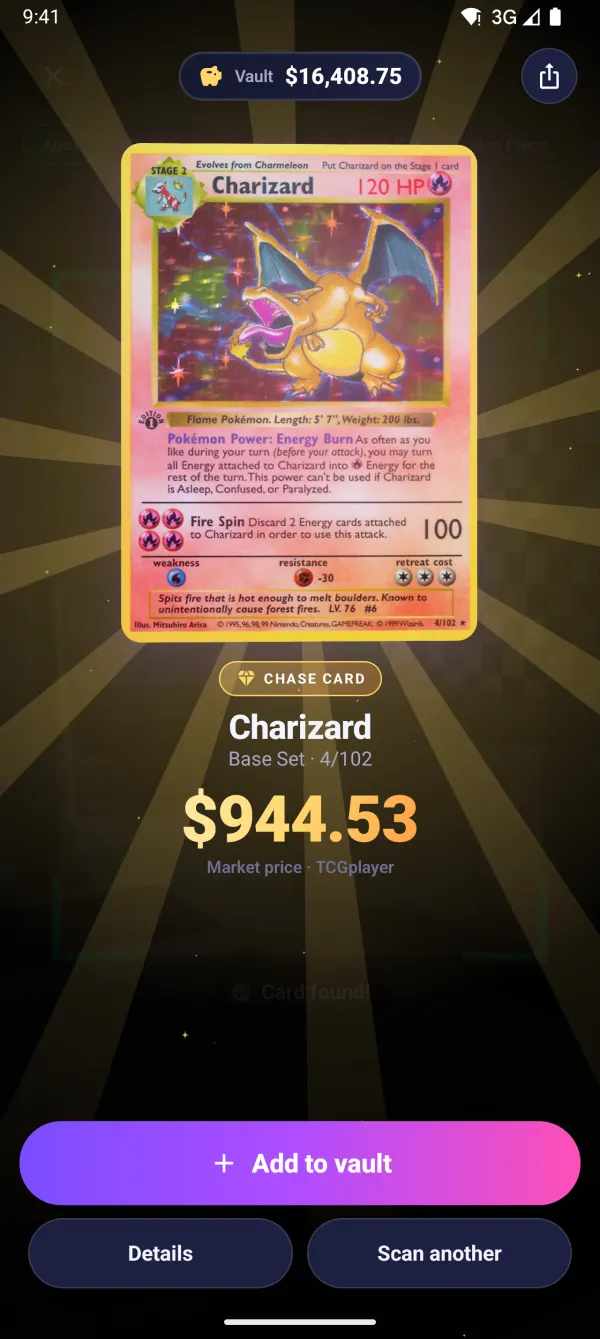
Want to see which cards top the market today? Open our list of the most valuable cards or the guide to the most valuable Pokémon cards right now.
Frequently asked questions
How can I tell if my Pokémon card is worth money?
Check the set symbol, the collector number and the variant, then look up recent sold prices for that exact printing. Holos, secret rares, full arts, stamped promos and anything printed between 1999 and 2003 deserve a closer look.
Are 1st Edition Pokémon cards always valuable?
No. The 1st Edition stamp adds a premium to cards that collectors already want, such as vintage holos, but a played 1st Edition common can still be worth little. Compare the 1st Edition and Unlimited prices of the same card.
Is the TCGplayer price what I will get if I sell?
Not exactly. The market price reflects what buyers recently paid on TCGplayer; selling to a shop usually brings less, and marketplace fees and shipping reduce what you keep. Your card's condition also moves the price up or down.
Should I get my card graded before selling it?
Only if it is valuable raw and in near-perfect condition. Grading has a cost and a waiting time, which you should check on the grader's website, so for most cards it does not pay off.
Can I check a card's price by scanning it?
Yes. The Foilmon app recognises the card from your phone's camera and shows its TCGplayer and Cardmarket prices, updated daily, along with graded value estimates.
Related guides
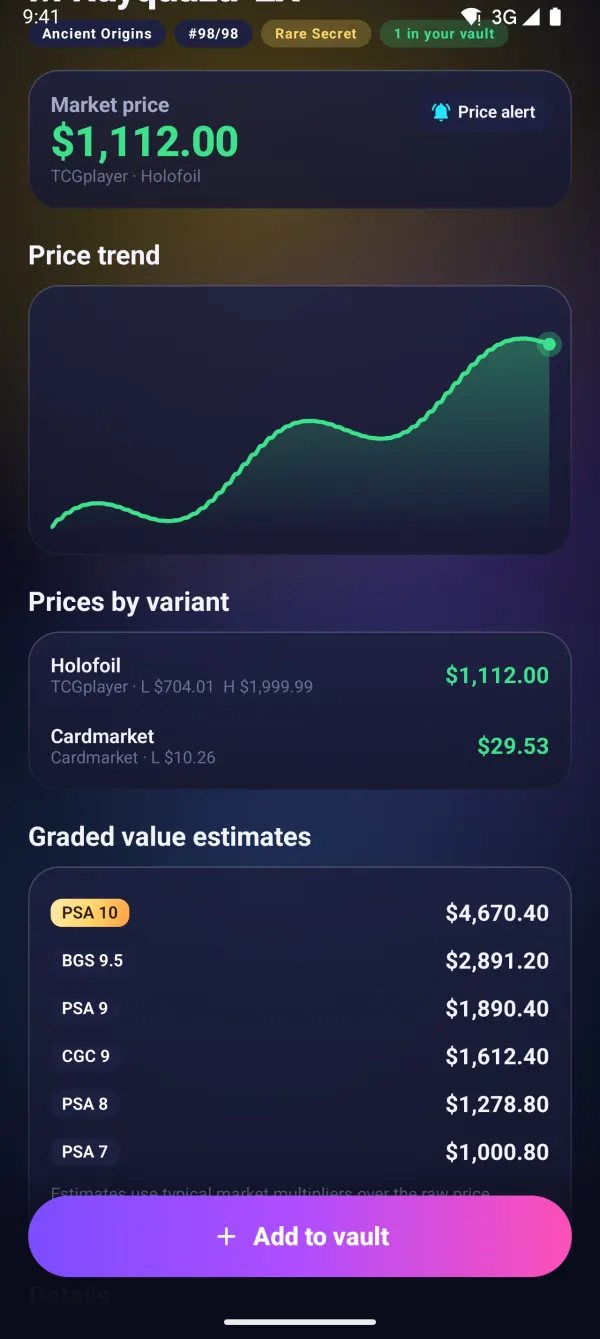 Card valuesPokémon card prices explained: where the numbers come fromPokémon card prices explained: TCGplayer market price, Cardmarket trend, eBay sold listings and graded prices, and why the same card differs by region.
 Collecting basicsPokémon card condition: how to judge your cards like a sellerPokémon card condition guide: what Near Mint, Lightly Played, Moderately Played, Heavily Played and Damaged mean, what to inspect and how to store cards.Card valuesShould you grade your Pokémon cards? How to decide, card by cardShould you grade Pokémon cards? How PSA, CGC, BGS and TAG compare, the math of raw vs graded value after fees and risk, and which cards are worth it.Card valuesThe most valuable Pokémon cards right nowThe most valuable Pokémon cards right now in English, ranked by TCGplayer market price and updated daily: vintage holos, Gold Stars, alt arts and promos.