
Japanese cards
Japanese vs English Pokémon cards: what actually differs
Japanese and English Pokémon cards share the same Pokémon and usually the same artwork, but Japan gets every set first, its packs hold 5 cards instead of 10, the rarities have other names (AR, SAR, MUR) and the very same card can sell for a very different price. Here is what changes, with real examples from Storm Emeralda and Delta Reign.
Japan gets the cards first
Every Pokémon TCG expansion comes out in Japan first. The English version usually follows a few months later, and it is rarely a one-to-one copy: English sets often fold cards from more than one Japanese product into a single, bigger release.
The newest example is Delta Reign, released in English on November 6, 2026. Its core is the Japanese set Storm Emeralda, which came out in July 2026: the same Mega Rayquaza ex, Zinnia's Trust and Mega Golurk ex, now with English text, new card numbers and English rarity names. An earlier case is Journey Together, which combined the Japanese Battle Partners with cards from the Japanese ex Start Decks.
There are exceptions. The anniversary set launched on the same day in both languages: 30th Celebration in English and MEGA Expansion 30th Celebration in Japan.
Set sizes and card numbers
Because an English set can absorb cards from several Japanese products, it usually ends up with a longer card list than its Japanese base set, and the numbering changes. The Special Art Rare Mega Rayquaza ex is card 110 in Storm Emeralda, while its English twin, the Special Illustration Rare, is card 138 in Delta Reign. In both languages, the secret rares are numbered above the printed set total.
So a Japanese card and its English version share the artwork but not the number. When you look up a price, search for the exact print, not just the Pokémon's name.
Packs and boxes: 5 cards or 10
A standard Japanese booster pack holds 5 cards and a Japanese booster box holds 30 packs. A standard English pack holds 10 cards and an English booster box holds 36 packs. Special Japanese sets follow their own rules: Pokémon Card 151, high class packs such as MEGA Dream ex and the 30th Celebration set all use different pack sizes.
The shelf looks different too. A Japanese main set usually comes as booster packs and booster boxes. An English set adds Elite Trainer Boxes, booster bundles, Build & Battle Boxes and blisters; you can see every Delta Reign product with its market price on the set page.
Foils differ as well. Reverse holo is an English-print finish, while special Japanese sets are known for their own mirror-foil patterns, the Poké Ball and Master Ball patterns being the most famous.
Rarity names: AR, SR, SAR, UR and MUR
Japanese cards print a short rarity code in the bottom-left corner. English cards use rarity symbols instead (see our rarity symbols guide), and several tiers have different names:
| Japanese code | Japanese name | English name | What it is |
|---|---|---|---|
| RR | Double Rare | Double Rare | The regular ex card of a Pokémon |
| AR | Art Rare | Illustration Rare | A full illustration of a regular Pokémon, numbered after the main set |
| SR | Super Rare | Ultra Rare | Full-art ex Pokémon and Trainers with a textured surface |
| SAR | Special Art Rare | Special Illustration Rare | Alternate full art of an ex Pokémon or a Supporter, usually the chase cards |
| UR | Ultra Rare | Hyper Rare | Gold cards of the Scarlet & Violet era |
| MUR | Mega Ultra Rare | Mega Hyper Rare | Gold Mega Evolution ex with artwork made for the gold version |
The trap is the phrase "Ultra Rare". In Japanese, UR is the gold card; in English, Ultra Rare is the full art, the Japanese SR. In the Mega Evolution era the gold card is the MUR, and the two languages line up neatly: the gold Mega Ultra Rare Mega Rayquaza ex from Storm Emeralda corresponds to the Mega Hyper Rare Mega Rayquaza ex in Delta Reign.
Card quality, texture and finish
Japanese and English cards are the same size and play by the same rules; only the language of the text changes. Many collectors find Japanese prints more consistent, with tighter centering, cleaner cuts and a finer holo grain. Treat that as collector experience, not a rule: there is no published data behind it, and you will find off-centre Japanese cards and flawless English ones.
If you are thinking about grading, judge the copy in your hand, not its language. Our guide on whether to grade a card and the grading calculator help you decide.
Japan-only cards and promos
Some Japanese cards never get an English version. Japan runs its own promo series, such as the M-P promos of the Mega Evolution era and the earlier SV-P promos, and some promos handed out in Japan, CoroCoro magazine inserts in particular, have never been printed in English. If you collect one Pokémon, the Japanese side can add cards that simply don't exist in your language.
Prices: often cheaper, but not always
For modern cards, the Japanese print often sells for less than the English one. The usual explanation is demand: far more collectors and players outside Japan want the English version. When we wrote this guide, in November 2026, most of Storm Emeralda's Art Rares and Special Art Rares were selling for less than their Delta Reign twins. The gold cards are a different story: the Mega Ultra Rare is one of the most expensive cards of the Japanese set. Compare the same artwork side by side:
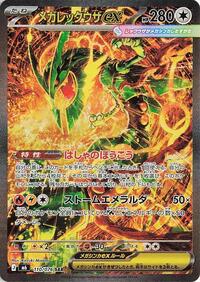 Mega Rayquaza exStorm Emeralda · 110/076$212.26
 Mega Rayquaza exDelta Reign · 138/103$312.70
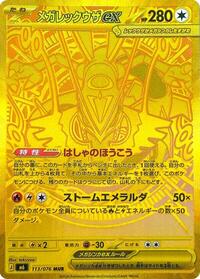 Mega Rayquaza exStorm Emeralda · 113/076$640.81
 Mega Rayquaza exDelta Reign · 141/103$273.82
These are the most valuable Storm Emeralda cards in our latest price snapshot (November 8, 2026):
| # | Card | Rarity | Price |
|---|---|---|---|
| 1 | Mega Rayquaza ex113/076 | Mega Ultra Rare | $640.81 |
| 2 | Mega Rayquaza ex110/076 | Special Art Rare | $212.26 |
| 3 | 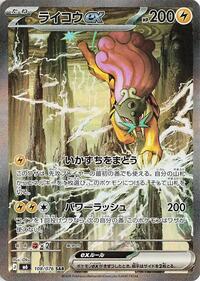 Raikou ex108/076 | Special Art Rare | $42.41 |
| 4 | 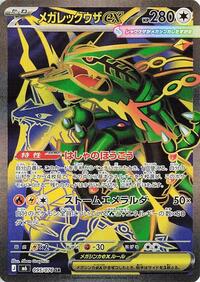 Mega Rayquaza ex095/076 | Super Rare | $30.37 |
| 5 | 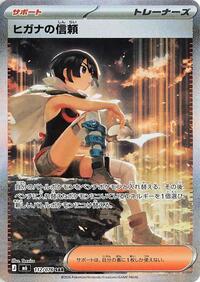 Zinnia's Trust112/076 | Special Art Rare | $21.01 |
| 6 | 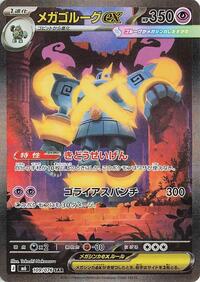 Mega Golurk ex109/076 | Special Art Rare | $15.43 |
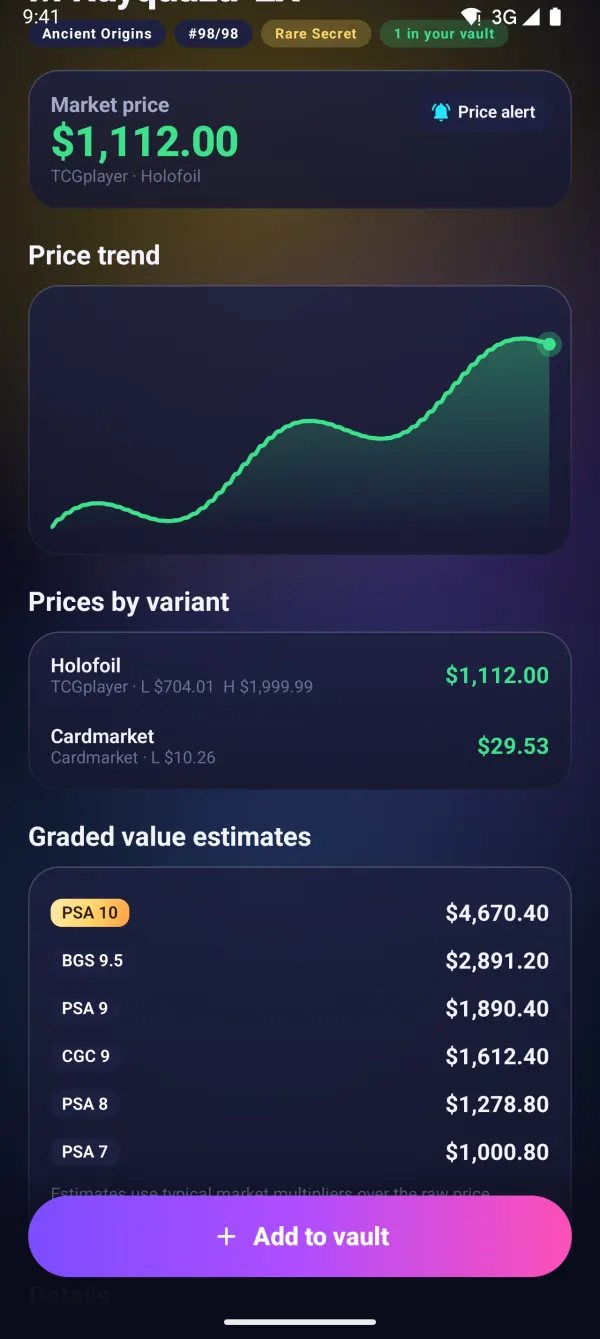
Three things move the gap: how new the English set is (launch prices swing a lot), the rarity (gold cards and Japan-only cards can cost more in Japanese) and condition, since graded copies follow their own market. Vintage cards are another world again. Always compare the exact card instead of assuming one language is cheaper. Prices on this site are TCGplayer market prices; here is how we collect them.
How to tell which set a Japanese card is from
Look at the bottom-left corner. Modern Japanese cards print four small marks there: the regulation mark (a letter used for tournament formats), the expansion code, the card number and the rarity code. The expansion code names the set: M6 is Storm Emeralda, SV2a is Pokémon Card 151 and SV8a is Terastal Fest ex. A card number above the set total, such as 110/076, marks a card beyond the main list: an AR, SR, SAR or MUR.
Once you have the code, find the set in our list of Japanese sets to see every card with its price.
Scanning Japanese cards without reading Japanese
You don't need to read Japanese to identify a card. Foilmon recognises Pokémon cards by their artwork, Japanese prints included: point the camera at the card and you get the Japanese print with its price, without typing a name you can't read. Prices can be shown in JPY, USD, EUR, GBP and more, and Japanese and English cards add up in the same collection.
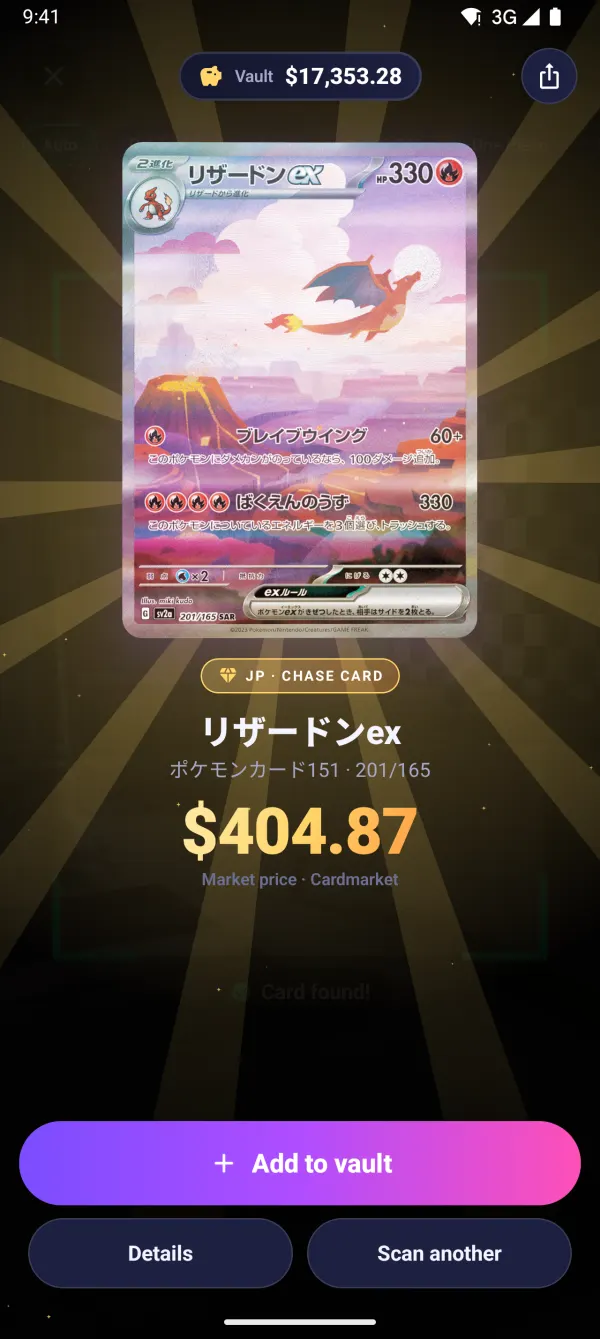
When the same art exists in both languages, check that the result is the Japanese print and not its English twin; the set code in the corner settles it. Our guide on how to scan Pokémon cards has more tips.
Frequently asked questions
Are Japanese Pokémon cards worth less than English ones?
Often, for modern cards: the Japanese print of an Illustration Rare or Special Illustration Rare usually sells for less. Not always, though: gold Mega Ultra Rares and Japan-only promos can cost more in Japanese, so compare the exact card.
Do Japanese Pokémon sets come out before English sets?
Yes. Japan usually gets each set a few months earlier, and English sets often combine cards from more than one Japanese product. Storm Emeralda (July 2026) became the core of the English Delta Reign.
How many cards are in a Japanese Pokémon booster pack?
A standard Japanese booster pack has 5 cards, against 10 in an English pack. Special Japanese sets, such as high class packs or Pokémon Card 151, use different pack sizes.
What is SAR in English Pokémon cards?
SAR (Special Art Rare) is called Special Illustration Rare in English. AR is Illustration Rare, SR is Ultra Rare, UR is Hyper Rare and MUR is Mega Hyper Rare.
Can I scan Japanese Pokémon cards with my phone?
Yes. Foilmon recognises Japanese Pokémon cards by their artwork, so you don't need to read Japanese, and shows the Japanese print with its price.
Sources
- Discovering Pokémon Japan: A Guide for Japanese Pokémon Releases (TCGplayer)
- East vs West: Comparing English and Japanese Pokémon TCG Cards (SNKRDUNK Magazine)
- How to Identify Rare Japanese Pokémon Cards: A Collector's Guide (SNKRDUNK Magazine)
- Japanese vs English Pokemon Cards: Every Difference Explained (Samurai Sword Tokyo)
- Hyper Rare Pokemon Cards: The Japanese UR and HR Prints Explained (Samurai Sword Tokyo)
- Pokémon TCG: Mega Evolution to debut 'Mega Ultra Rare' gold cards (VGC)
- ME06 Delta Reign (November 6, 2026) (Elite Fourum)
- Pokémon TCG: Mega Evolution — Delta Reign Revealed (PokéGuardian)
- Will Pokémon TCG's Pikachu & Eevee CoroCoro Promos Come To USA? (Bleeding Cool)
Related guides
Japanese cardsDelta Reign vs Storm Emeralda: English and Japanese comparedDelta Reign vs Storm Emeralda: how the Japanese M6 set became the English one, the extra cards, card numbers, rarity names and price comparison.Collecting basicsPokémon card rarity symbols: what every mark meansPokémon card rarity symbols explained: circle, diamond, star, every star tier up to Mega Hyper Rare, and Japanese codes such as AR, SR and SAR.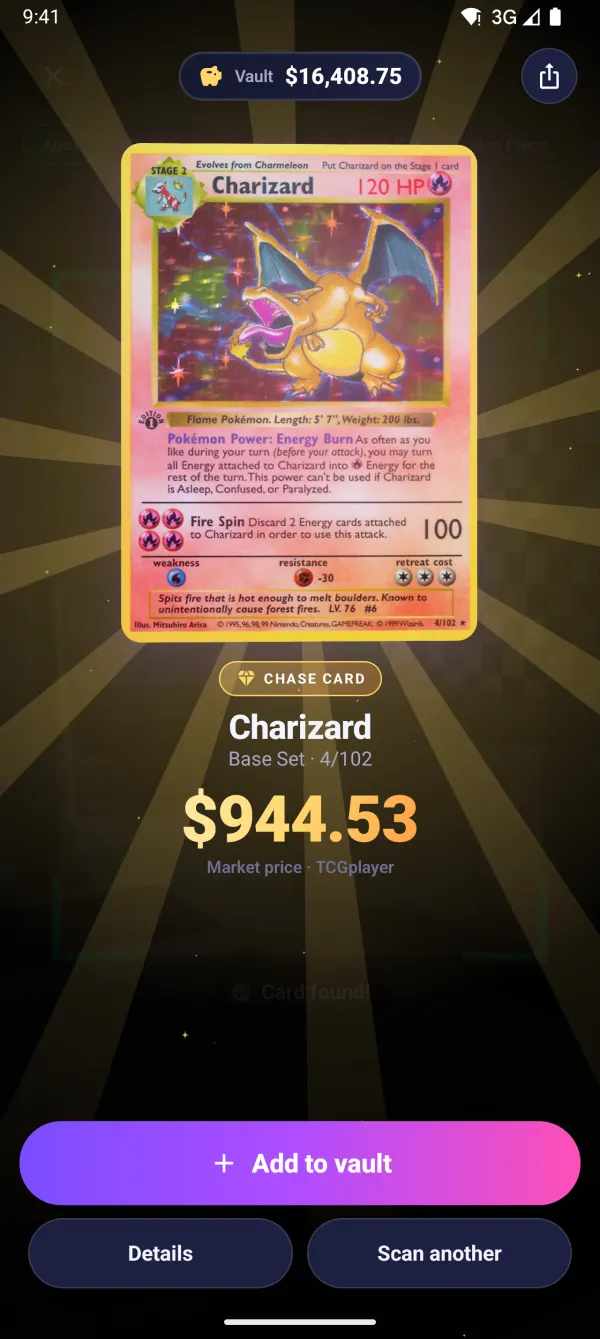 Scanning cardsHow to scan Pokémon cards with your phone and see their valueHow to scan Pokémon cards with your phone and see their value: step by step, tips for holos and sleeves, Japanese cards and batch-scanning a binder.
 Card valuesPokémon card prices explained: where the numbers come fromPokémon card prices explained: TCGplayer market price, Cardmarket trend, eBay sold listings and graded prices, and why the same card differs by region.