
Card values
Should you grade your Pokémon cards? How to decide, card by card
Grade a Pokémon card when its likely graded value, after fees, shipping and the chance of a lower grade, is clearly above what it sells for raw. In practice that means valuable cards in near-perfect condition, usually popular Pokémon or a set's chase cards. For most cards in a collection, grading costs more than it adds.
What grading gives you
A grading company checks that the card is genuine, gives it a condition grade, usually on a 1 to 10 scale, and seals it in a tamper-evident case with a label and a certification number. PSA, for example, authenticates the card first, looks for signs of trimming or re-colouring, and only then grades it. Buyers pay for that certainty: a graded card can be bought online without worrying about photos, fakes or optimistic condition descriptions.
Grading does not improve a card. It puts a number on the condition the card already has, so the real question is always whether that number is worth more than the cost of getting it.
The main grading companies
Four names come up again and again in Pokémon listings. Each has its own scale and style, and buyers do not value their labels equally, so compare sold prices for the same card at the same grade with each company before you choose.
| Grader | Scale | What stands out |
|---|---|---|
| PSA | 1 to 10, Gem Mint 10 at the top | One overall grade. PSA describes a 10 as a virtually perfect card, with centering within about 55/45 on the front and 75/25 on the back. Publishes population data. |
| CGC | 1 to 10, with Pristine 10 above Gem Mint 10 | Pristine 10 needs 50/50 centering and a card that looks flawless under 10x magnification; Gem Mint 10 allows one criterion to fall just short of that. |
| BGS (Beckett) | 1 to 10 in half points | Known for printing four subgrades on the label: centering, corners, edges and surface. Check Beckett's site for the services currently open. |
| TAG | 1 to 10, backed by a 1,000-point score | Grades from high-resolution imaging and gives a digital report with pictures of the defects it found; its Pristine label sits above Gem Mint 10. Grades Pokémon and other trading card games. |
Fees and turnaround times change often, and each company sells several service levels. Check each grader's current price list on its own site before you submit. At PSA, for example, every service level has a maximum declared value, so the more a card is worth, the more expensive the level it needs.
The math: when grading pays
Write down four things for the card before you send anything:
- Raw value: what the card sells for ungraded, in its real condition.
- Graded values: recent sold prices for the grades it could realistically get, for example a 10, a 9 and an 8, at the company you are considering.
- Total cost: the grading fee for the right service level, shipping both ways, insurance and, if you will sell, the marketplace fees.
- Your odds: an honest estimate of how likely each grade is, based on centering, corners, edges and surface.
Multiply each graded value by its odds and add the results: that is the expected graded value. Grading makes sense when the expected graded value minus the total cost is clearly higher than the raw value. "Clearly" matters, because your estimate of the odds is the weakest part of the sum.
Two patterns show up again and again. First, the gap between a 10 and a 9 is often much bigger than the gap between a 9 and a raw copy, so the decision usually hinges on your odds of a 10. Second, a card that comes back an 8 or lower can end up worth less than the raw card plus what you paid, which is why cards with any visible flaw rarely pay off. Our grading calculator runs this sum for you.
Population reports
Graders publish population reports: how many copies of each card they have graded, grade by grade. PSA includes population figures in its CardFacts data, and TAG runs its own pop report covering Pokémon and other games. They answer two useful questions:
- How scarce is a top grade? If few 10s exist compared with the total graded, a 10 tends to sell at a strong premium. If a large share of submissions come back as 10s, the premium shrinks.
- How hard is this card to grade well? The share of 10s among all graded copies, often called the gem rate, shows how forgiving the print run is. A low gem rate points to common centering or edge problems from the factory, which lowers your own odds too.
Read them with care. Counts for new sets keep climbing as submissions arrive, and a card cracked out of its case and resubmitted can be counted more than once.
Which cards are good candidates
- High raw value. The fee hurts less on a valuable card. If the raw value barely covers the fee, grading rarely pays.
- Near-perfect condition. Sharp corners, clean edges, no scratches and good centering on both sides. Check the card against our condition guide first.
- Iconic Pokémon and chase cards. Charizard, Pikachu, Umbreon, Mew and the Special Illustration Rares or Mega Hyper Rares of popular sets tend to have the most active markets for graded copies.
- Vintage cards. On older and 1st Edition cards, authentication has value of its own, because buyers worry more about fakes and about condition.
- Cards you plan to keep. A slab protects the card for good, which is reason enough for some collectors even when the math is close.
 Umbreon exPrismatic Evolutions · 161/131$1,186.84
 Mega Charizard X exPhantasmal Flames · 125/094$570.29
 Mega Rayquaza exDelta Reign · 138/103$312.70
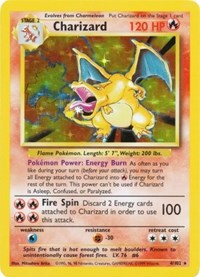 CharizardBase Set · 004/102$987.13
Poor candidates are cheap cards, cards with any crease or whitening, and cards whose graded copies sell for less than the raw value plus your costs. In that last case it is usually cheaper to buy the card already graded.
Turnaround and risk
Turnaround depends on the service level you pay for and on how busy the grader is, so check the current estimate on its site when you submit. While you wait, your money is tied up and the market can move; prices of brand-new cards in particular can change a lot in the weeks after release. Pack the cards the way the grader asks (PSA, for instance, wants each card in a penny sleeve inside a semi-rigid holder), insure the parcel and photograph the front and back of every card before you ship. Keep in mind that graders refuse to grade cards that show trimming, re-colouring or other tampering.
Check the numbers first
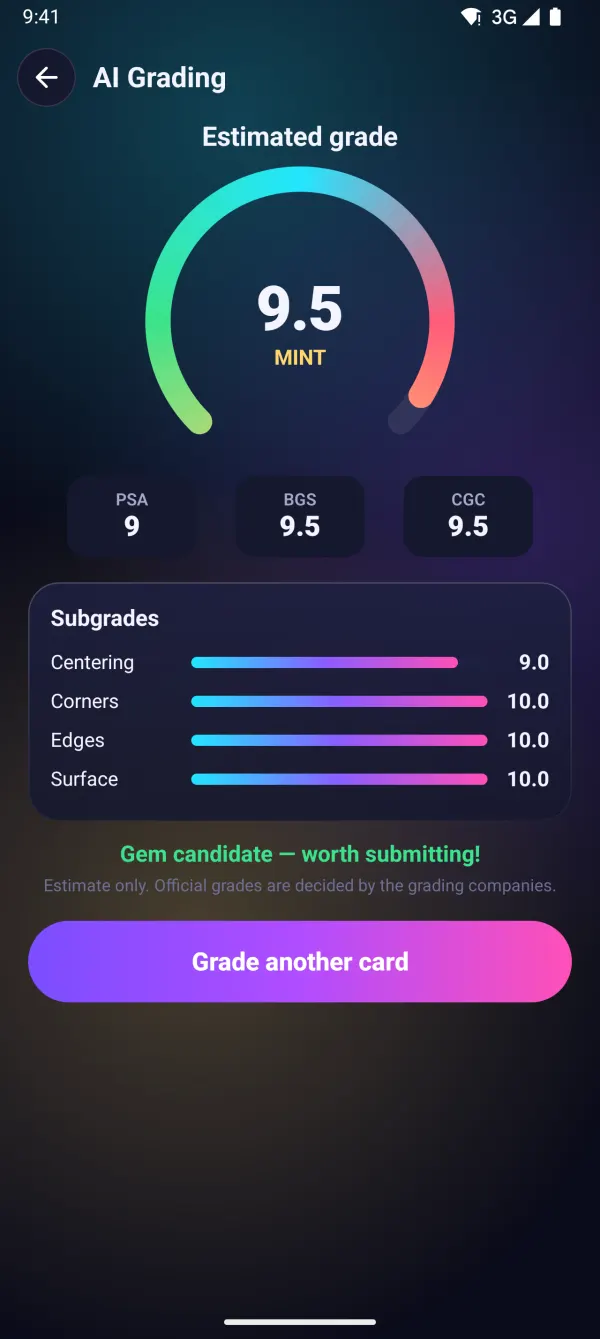
Before you send a card, look up its raw price, its price history and its graded values. Foilmon shows TCGplayer and Cardmarket prices updated daily together with graded value estimates for PSA, BGS and CGC, and its AI grading check reviews centering, corners, edges and surface from a photo, so you can judge your odds before paying a fee.
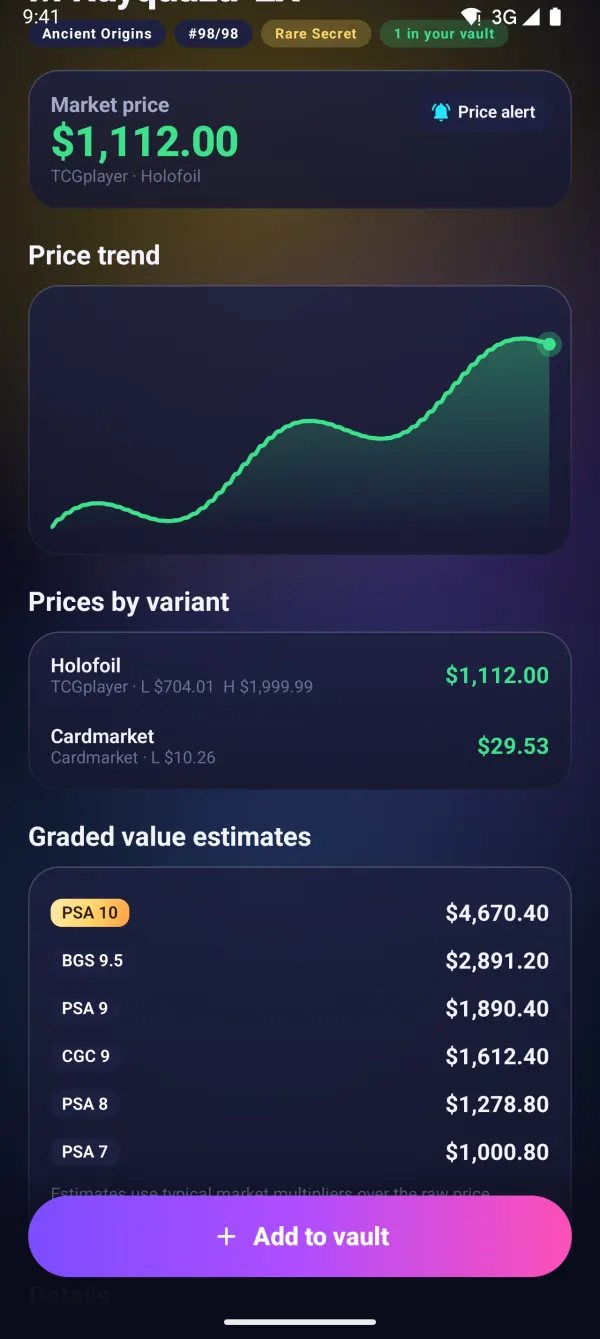
To see which cards carry the biggest numbers, browse the most valuable Pokémon cards.
Frequently asked questions
Is it worth grading Pokémon cards?
For valuable cards in near-perfect condition it often is; for most cards it is not. Compare the expected graded value, minus fees, shipping and selling costs, with what the card sells for raw.
Which grading company is best for Pokémon cards?
There is no single answer. PSA, CGC, BGS and TAG use different scales and buyers value their labels differently, so compare recent sold prices for the same card and grade at each company and pick the one where the premium best covers the fee.
How much does it cost to grade a Pokémon card?
It depends on the company, the service level and the card's declared value, and prices change often. Check each grader's current price list on its official site, then add shipping both ways, insurance and any selling fees.
How long does Pokémon card grading take?
It depends on the service level you pay for and how busy the grader is. Faster levels cost more; check the current turnaround estimate on the grader's site when you submit.
Should I grade cards straight from a booster pack?
Only if they are valuable and look near-perfect. Pack-fresh cards can still have off-centre cuts, rough edges or print lines, so inspect them under good light first.
Sources
Related guides
 Collecting basicsPokémon card condition: how to judge your cards like a sellerPokémon card condition guide: what Near Mint, Lightly Played, Moderately Played, Heavily Played and Damaged mean, what to inspect and how to store cards.Card valuesHow much is my Pokémon card worth?How much is my Pokémon card worth? Identify the exact print, check its condition and compare recent sold prices, raw or graded, in a few minutes.
 Card valuesThe most valuable Pokémon cards right nowThe most valuable Pokémon cards right now in English, ranked by TCGplayer market price and updated daily: vintage holos, Gold Stars, alt arts and promos.Card valuesPokémon card prices explained: where the numbers come fromPokémon card prices explained: TCGplayer market price, Cardmarket trend, eBay sold listings and graded prices, and why the same card differs by region.